
Optical characterisation of Silicon colour centres for future Quantum Computers
Masters Project Description
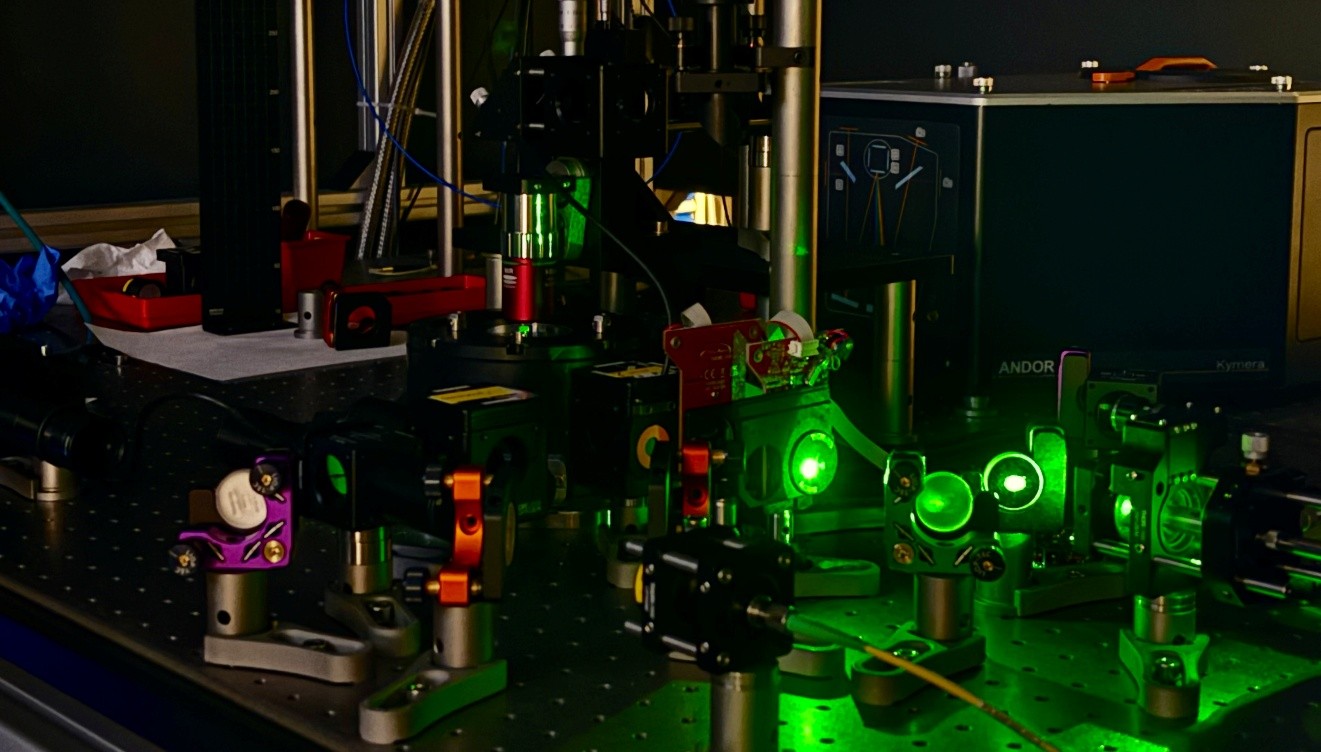
Silicon is the backbone of modern electronics, and it has great potential to become the foundation of quantum technologies as well. Certain atomic-scale defects in silicon emit single photons at telecom wavelengths, making them promising candidates for quantum light sources, quantum memories, and long-distance quantum networks. In this project, you’ll step into an optics lab and work hands-on with state-of-the-art research equipment. Using cryostats that cool silicon samples to just a few degrees above absolute zero, you’ll probe these defects with photoluminescence and time-resolved photoluminescence spectroscopy. You’ll complement these measurements with room-temperature experiments, using powerful scanning tools to characterise the many structures patterned around the defects. By analysing emission spectra and lifetimes, you’ll uncover how these defects behave and help identify which ones are best suited for future quantum devices!
Benefits for the Future Quantum Scientist
- Hands-on experience: Learn cryogenic and optical techniques, from aligning free-space and fibre optics to operating spectrometers and single-photon detectors.
- Deep understanding: Learn how light and matter interact at the atomic scale, and how spectroscopy reveals the hidden properties of defects in a crystal.
- Quantum contribution: Be part of the exciting world of quantum computing by building the essential building blocks!
Expected Qualifications:
Master student in Physics, Quantum Photonics or related.
Contacts:
Amedeo Carbone, Silicon Engineer, amedeo.carbone@nbi.ku.dk - Team Photonics
Claudia Piccinini, Photonics Engineer, claudia.piccinini@nbi.ku.dk - Team Materials
Gitte Michelsen, Student Coordinator, gittem@nbi.ku.dk
How to Apply:
Please apply by email to Amedeo and Claudia. Your application must include:
- CV
- Letter of motivation
- Transcript of grades